Coffee
Notes on coffee ☕
Favorite Beansඞ
Specialty:
- Ristretto - Pache (espresso, iced, universal)
- Brew Brothers Specialty Coffee - Bourbon Rojo (espresso)
- Cafe Amaia Zagrado (light columbian espresso, extremely chocolatey and fruity even in espresso form)
- DAK - Halo Berry (dark roast acidic berry splash)
- Renegade Beans - DAGA
- the brick
- Shokunin
- Paper Mill
- Rocket Bean
- Santa
- Next Level
Best of the best:
- Father Carpenter - Peru honey ferment light roast (velvety and delicate, tea-like)
- Paper Mill - Etago Kenya (funky, nuanced, black tea background + a dance of fruity flavors in front, very specific)
- Paper Mill - Migoti Hill Burundi (superbly balanced with a very defined pleasant green apple acidity, crowdpleaser)
- Next Level - Panama Lamastus natural: layered fruits, cooling ball probably helped a lot with preserving the layers, bias towards pleasant acidity due to Spain water but extremely balanced overall
- Next Level - Chiri Chill washed: lightest tasting espresso ever, surprisingly just as pleasant as its acidic strength
- Santa - Mexico Ameca washed: middle taste pleasantly bitter bias, turns smoothly over to fruity acidity, stronger but creamy body
- Paper Mill - Lot 20 Orange Kenya koji orange co-ferment: amazing marriage of typical koji/fermented taste profile with added orange nuance
- Südseite - The Fermentation Project from James Hoffmann & Lucia Solis, Guatemala, Wild Fermentation
Emergency:
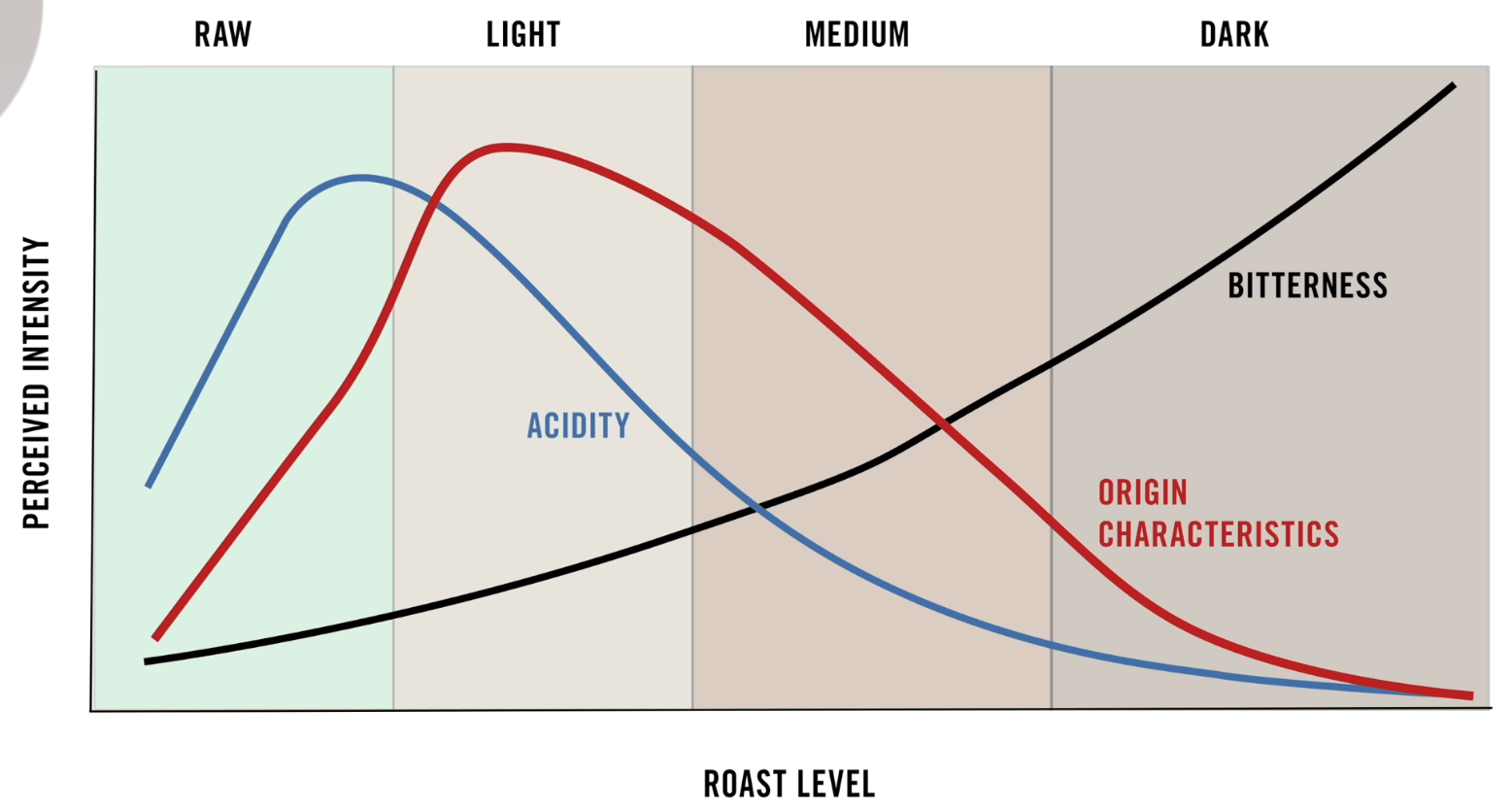
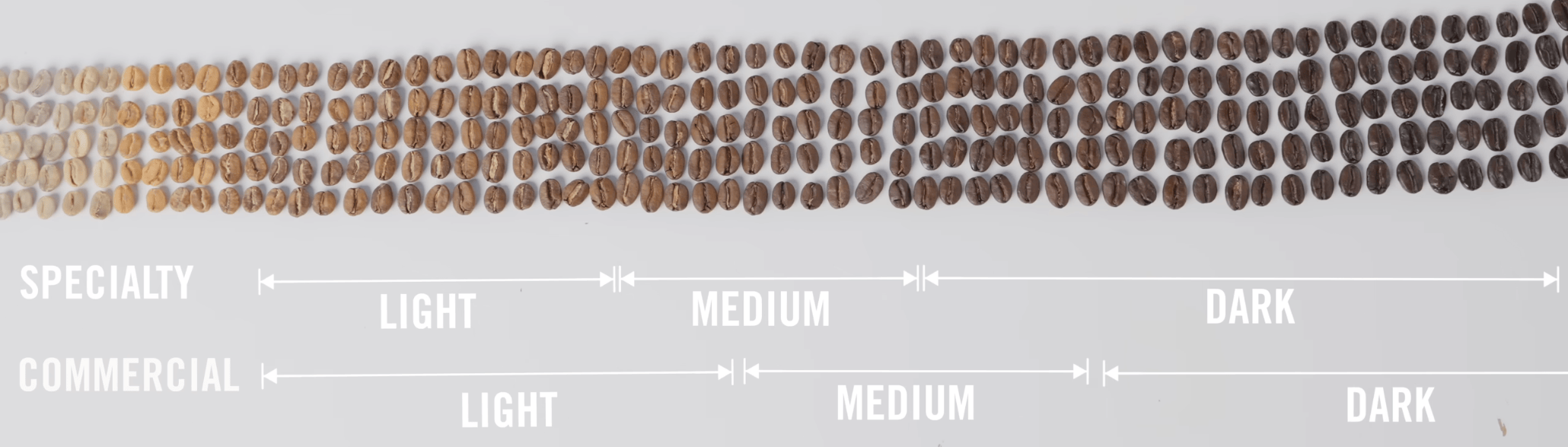
Roast guideඞ
Grind guideඞ
Kingrinder K6 settings rough guide.
Pourover techniquesඞ
General notes applicable to all techniques:
- Hot brown water, lack of taste or sour means too coarse. If bitter then too fine.
- 2:30 is usually too fast, try to hit a soft target around 3-3:30 for draw down time. Finer if faster, coarser for too slow.
- The closer you pour the deeper the stream penetrates the coffee, the closer the pour the more consistent the extraction
- 5g/s is a nice sweet spot for pouring speed
- Pouring kettle can help for a sharper and more consisten stream but should not be needed if pouring close to the vessel
- The slower the paper the fuller the extraction, with modern filters rinsing is not required
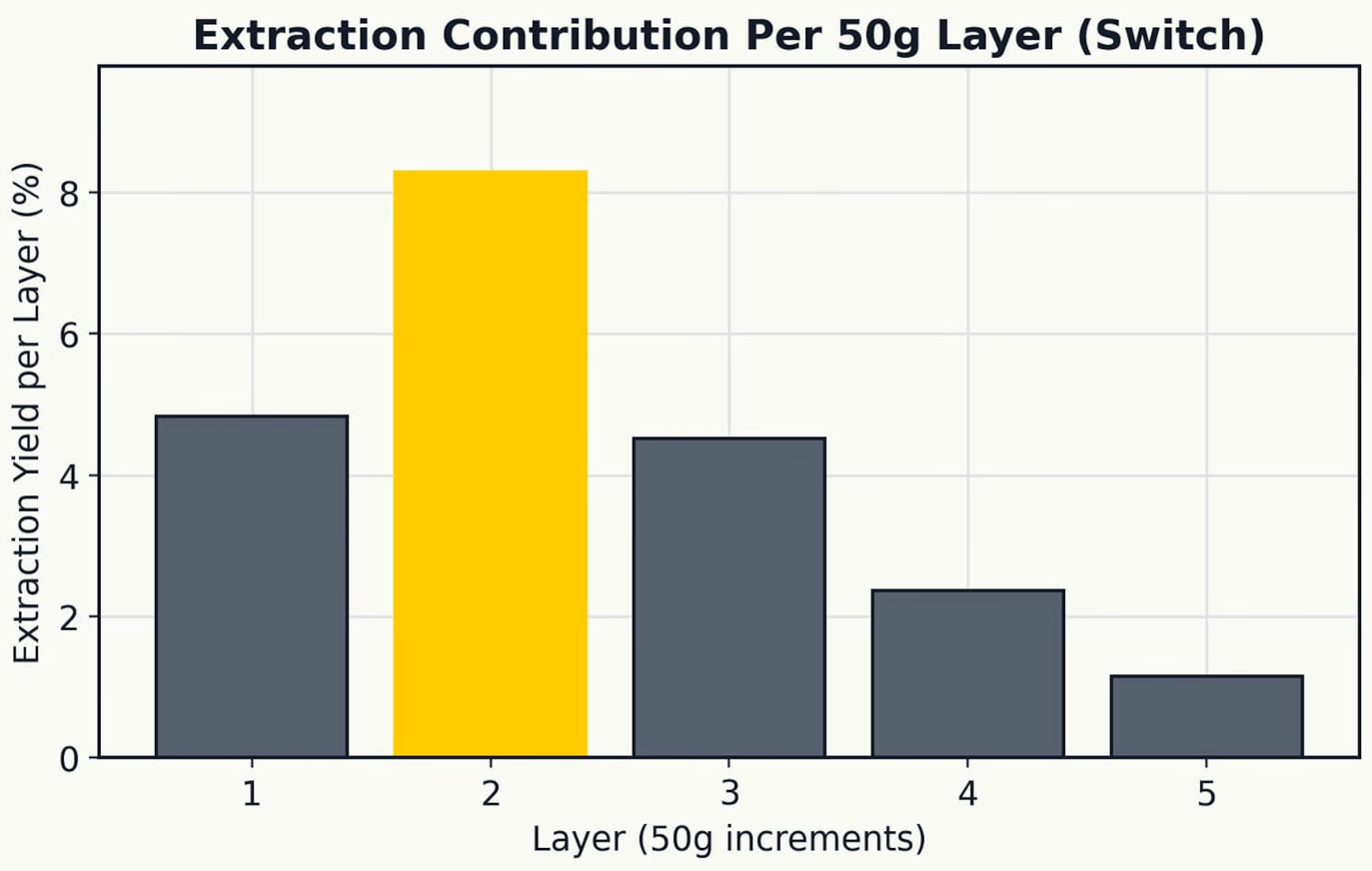
Salami shot of pours:
- Bloom, first "activation", more sour, main tastes
- Main tastes
- More bitter notes
- "Tea" and warm water
- Warm water, dilution
Hoffman 1 Cup V60 Methodඞ
From: A Better 1 Cup V60 Technique - James Hoffmann
- 15g ground coffee
- 250g boiled water 80-85°C dark, 90-95°C medium, 100°C light
- Grind: medium-fine (coarser for darker roast)
Examples with Kingrinder K6:
- CapriSette - Belgique "medium-light" dark roast, 57-60~ clicks (55 too bitter, over 65 sour and watery), 95-97°C
- CapriSette - Professional "medium-dark" dark roast, 60-63~ clicks, 90°C
- DAK - Halo Berry dark roast, 75-80 clicks 85°C
- Lykke - Peru Agua de Nieve light roast 65 clicks, 100-97°C
- Father Carpenter - Peru honey ferment light roast: 53-55 clicks, 98-100°C (60 too sour)
- Father Carpenter - Kenya light roast: 45 clicks 100°C (50 too sour)
Recipe:
- Pour 50g of water to bloom
- Gently Swirl
- Bloom 30 sec
- Pour to 100g total (40%)
- Pause 10 sec
- Pour to 150g total (60%)
- Pause 10 sec
- Pour to 200g total (80%)
- Pause 10 sec
- Pour to 250g total (100%)
- Gently swirl
- Drawdown should finish around 3m or more depending on the bean
Stronger variant (by grinding "too fine"):
- Everything the same, but grind way finer
- At the end remove the cup at around 3:00~ like usual and leave the rest to drip away
- Ideally you would have 215-220g of coffee at the end (as opposed to usual method which leaves you with 250g)
If grind was too coarse:
- Increase amount of pours (split total weight into more chunks)
- Wait to drip completely between pours
- You can also increase speed to extract a little more
- Add additional 50g pour on top of the usual 250g to extract even more (this makes taste weaker too though)
Hoffman V60 Switchඞ
Examples with Kingrinder K6:
- Father Carpenter - Kenya light roast:
- using V60 Neo, 45 clicks 100°C (slightly too sour)
- Kalve - Peru Huabal:
- using V60 Neo, 60 clicks 96°C (slightly too bitter)
Recipe:
- Rinse filter
- Add 15g coffee
- Pour 30g to 45g water, swirl
- Pour the remaining 250g total
- At 2:00 give the slurry a stir in both directions
- Open the switch at 2:15
V60 Switch Consistent (Coffee Chronicler)ඞ
20g, 320ml or 15g / 240ml, medium-fine grind
The bigger the dose, the longer the timings should be, add 30s to each stage per 10-15g.
Pouring structure:
- Open switch and pour 50% total water volume (pouring 30-40% here can work very well too)
- Let drain and then close the switch at 45s-ish (close faster, around 25s, for more sweetness, less acidic)
- Pour rest of the water
- Steep 2min
- Open Switch and enjoy
Lance Hedrick V60 Switch Samo Bloomඞ
Colder temp bloom allegedly leads to more preserved volatiles, volatile aeromatics that would otherwise evaporate. Might help if using lighter honey/natural beans.
Examples with Kingrinder K6:
- Father Carpenter - Peru honey ferment light roast: 70 clicks, 94°C (good but lacking stronger body)
15g medium-coarse coffee, 250g Water
- Close switch, pour 50g water @ 75°C
- Add coffee, tare scale
- Stir gently and then let sit for 1:30
- Pour 100g water @ 90-95°C over spoon on bed
- Gently excavate bed
- Open switch, let drain fully
- Close switch, pour to 200g @ 90-95°C over spoon on bed
- Gently excavate bed
- Gentle swirl open switch to drain fully
Aeropress techniquesඞ
General tips:
- Metal filter will let through too many fines, paper is preferrable for more consistent and balanced result.
- Stirring front to back is better than swirling in circular motions, former leads to a flatter bed, latter creates a mound.
- Plunger can create a vacuum when pressed in and pulled outwards slightly, this can mitigate inconsistent taste where first end is underextracted compared to the rest of the shot.
- Inverted methods require caution, all the trapped CO2 will contribute to pushing the plunger out when turning the AeroPress around.
- Many recipes call for very low temperatures, but be wary as these usually fall in to two very different categories: variations on the original recipe which try to make things consistent but "plain"; and competition recipes which aim for weird unextracted tastes to pull out unexplored taste profiles for judges who have been tasting coffee for their entire lifetimes. For the average person the first category can work, but will leave a lot of tastes unextracted; the second can be very hard to dial in and understand.
- If all shots seem to turn out sour, you can explore discarding the first 20g of the shot away with lower temperature.
Regular AeroPressඞ
This recipe calls for a fine grind, nearing espresso grind levels and is built around the paper filter only. Using the regular filter holder and regular paper filter, it will underextract in the beginning like every other non-inverted AeroPress recipe.
Warning when using only the metal filter: you will find it too bitter even at double coarseness of pourover (100 clicks or more with Kingrinder K6) and 95°C and might find some sour notes too, this is due to the metal filter not holding enough in when seeping and pushing.
Examples with Kingrinder K6 (estimated click size should be 55 clicks):
- Father Carpenter - Kenya light roast:
- with metal and paper filter: 35-25 clicks, 97-100°C still too sour (maybe confusing sour with bitter here)
- with paper filter only: 38 clicks, 97-100°C (35 clicks too bitter, 45 too sour) (maybe confusing sour with bitter here)
- Lykke - Peru Agua de Nieve light roast:
- with paper filter only: 34 clicks, 100°C (maybe confusing sour with bitter here)
Recipe:
- 11g coffee (ground at the finer end of medium, assuming this is light roasted coffee. The darker you go the more you may prefer to increase the dose and coarsen the grind.)
- Put the paper filter into the cap (or use metal and paper filter, both). Don't rinse or preheat the brewer (it doesn't make any difference)
- Put coffee into the brewer
- Place on scales and then add water, aiming to wet all the coffee during pouring. 200g water (100°C for light, 90-95°C medium, 85-90°C dark)
- (Optional) Stir if it seems clumped
- Start a timer, and immediately place the piston piece into the top of the brewer, about 1cm in
- Wait 2 minutes (but you may go up to 8-10 minutes)
- Holding the brewer and the piston, gently swirl the brewer
- Wait 30s
- Press gently all the way (should take 30-60s)
Inverted AeroPressඞ
Inverted method for "espresso-like", more stronger taste. This also results in a more uniform taste compared to regular AeroPress method which underextracts in the beginning. 18g beans results in 36-40g of coffee from an espresso machine, 65 to 70g of coffee from immersion techniques to get something "espresso-like".
This recipe is made for dark and medium roasts, light roast will come out sour even with more stirring and steeping time.
Paper filter preferred, but metal or both together also work.
Examples with Kingrinder K6 (estimated click size should be 50 clicks):
- CapriSette - Belgique "medium-light" dark roast:
- with metal filter: 40 clicks
- with paper filter: 50 clicks
- CapriSette - Professional "medium-dark" dark roast:
- with metal filter: 40 clicks
- DAK - Halo Berry dark roast:
- with metal filter or paper filter only: 35 clicks (40 clicks too sour)
Recipe:
- Add 18g finely ground coffee
- Add 90g of boiled water
- Stir carefully but a little agressively to make sure all of the coffee is immersed
- Screw the filter on and steep for 90s
- Put cup on filter and flip the press with the cup
- Swirl to clear clumped sides
- Sit for 5s
- Press gently (slowly enough to not create a channel that would underextract)
- Press til the final end (unlike traditional AeroPress recipe)
- (Optional) Add 100ml of prepared milk OR 100-160ml of 80°C water to get it closer to a pourover
Coffee Compass AeroPress Methodඞ
Examples with Kingrinder K6 (estimated click size should be 85 clicks):
- Kalve - Brazil Bugundes Community light roast: 80 clicks, 96°C
- Paper Mill - Etago Kenya: 80 clicks, 94°C
- Paper Mill - Migoti Hill Burundi: 80 clicks, 94°C
"...there's also reason to be wary of many of the more popular AeroPress recipes circulating out there. Many call for more an absurd amount of coffee, often a 10:1 ratio, or even stronger. While I'm sure that many of these recipes with the right coffee could make an interesting, even delicious cup of coffee, for people in the real world, who are using their hard-earned cash to purchase coffee, I question such an inefficient recipe. If you can make a delicious cup of coffee with 15 grams of coffee, why on earth would you waste another 5-7 grams?"
- Grind 15 grams of coffee - medium-coarse grind setting.
- Place paper filter, may use two
- Briskly add 225ml of boiling hot water.
- Quickly, but carefully, place plunger in the Aeropress to create a vacuum
- Sit for 30-60s
- Remove plunger and gently break the crust with a spoon, then place the plunger back in to recreate that vacuum
- Sit for 2-6min
- Push slowly and stop at hiss
Zuppa Lunga AeroPressඞ
Otherwise known as SOUP (esSpresso, Only UnPressurized, and yeah, this acronym's a bit stupid) or the "oreo method".
This method tries to avoid any extra agitation from water pours to extract as much coffee essence/nectar without any astringency, so it works best with fruity, sweet, extra process light roasts.
Examples:
- Father Carpenter - Peru honey ferment light roast: 40-45 clicks, 100°C send it through twice or go extra slow
- Lykke - Peru Agua de Nieve light roast: 35 clicks, 98°C (30 too bitter)
Recipe:
- Put the paper filter into the cap, screw the cap on
- Drop in 15g of coffee, slightly coarser than espresso
- Tap and shake to level the grinds
- Tamp with a second paper filter using the plunger, remove carefully to avoid air turbulence messing up the tamped grinds and filter
- (Optional "sour pass") Add 20-25g room temp water, push it out with plunger in at around 1-2cm, down until top filter looks dry-ish, then take plunger out again and set aside the resulting sour extraction
- (Optional) Drop in a metal filter to avoid the second filter from floating up (higher the temp, the more likely this will happen due to more CO2 release)
- Pour 150g of water, optionally using a long spoon/object to soften the water's fall even further
- Add plunger, and do a slow plunge and stop when hitting "the hiss", around 60-120s
French press techniqueඞ
- Grind medium
- Add 30g to 500g water
- Sit for 4 minutes
- Stir crust and then scoop up foam and coffee bits off the top
- Wait 5-8 minutes
- Plunge just to underneath the surface and pour gently and carefully.
Moka pot techniqueඞ
Constants:
- Boiling water in the boiler
- Full basket of coffee
- Avoid sputtering phase by cooling down the chamber under cold water
Variables:
- The lighter the roast, the finer the ground.
- Less filled boiler will brew a bit earlier. Usually, dark roasts -> a bit less water, light roasts -> full boiler
- Add aeropress filter if possible
Recipe:
- Fill lower compartment to the safety valve
- Fill the coffe compartment
- Preheat the hob with relatively low heat on the gas hob
- Assemble the pot and wait
- As soon as the liquid starts to flow, turn off the heat. For electric hobs, move it to the edge of the hob.
Troubleshooting, if the sputtering phase starts before you think it's time (not enough coffee out etc):
- Too fine of a grind
- Too much heat
Cupping techniqueඞ
The oldschool way
- 10g of coffee
- Ground medium
- 180g water straight off the boil
- Crack at 4:00, and clean the top
- Taste from 15:00 until 45:00
Hoffman way
- 6g ground coffee to 100ml
- 100°C water
- At 4min, break crust and scrape remains
- Wait 10min to cool
Milk techniquesඞ
Overall milk at 55-65°C, 55°C usually more sweeter. Milk breaks at about 70°C, definitely avoid that.
More fat = better foam usually
Pourover ratio around 200g coffee, 50g milk
Chiato Milkplayඞ
100ml is between MIN line and lower MAX line.
Setting diagram:
- Warm, firm milk foam (faster spin)
- Warm, creamy milk foam (slower spin)
- Hot chocolate drink (aka mixing mode, even more slow)
- Cold milk foam
Simple latte macchiato, cappucino with thicker foam:
- Use setting 2 with spring attachment
- Stop foaming just before reaching auto stop (1:42s) to have it more sweet
Microfoam-ish (not quite, but servicable):
- Use flat attachment, set at a slight lean on one side, use fatter milk
- 1m37s with setting 2, 30s with setting 4
Subminimal Nanofoamerඞ
Italian technique:
- One finger between base and pitcher, slight angle (~30deg) 15s
- Tap and swirl
- Transfer to temporary cup and then back to pitcher (so as to mix milk and foam so they won't separate)
- Pour immediately
Official technique:
- Start at the centre, barely in at a slight angle (30deg), 5s
- Go deeper and slowly towards the edge while keeping a vortex, until sound of milk is more quiet, about 20s (in this stage avoid making any new bubbles!)
Chiato Milkplay and Subminimal Nanofoamer combinedඞ
This recipe leverages the Milkplay to do the airation consistently and the Nanofoamer to achieve the nanofoam.
- Fill Milkplay with 100-150ml of milk
- Use flat attachment with setting 1 until milk is at 55°C
- Transfer to pitcher
- Use the Nanofoamer, one finger between base and pitcher, slight angle (~30deg) 15s
- Tap and swirl
- (Optional) Transfer back to Milkplay and then back to pitcher again (this results in more uniform milk)
- Pour
Recipesඞ
Espresso tonic:
- Espresso
- Tonic Water
- Blueberry Simple Syrup
- Ice